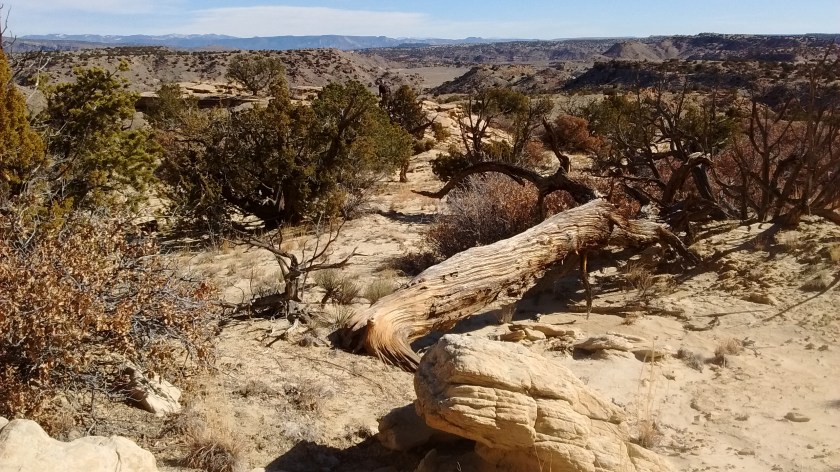
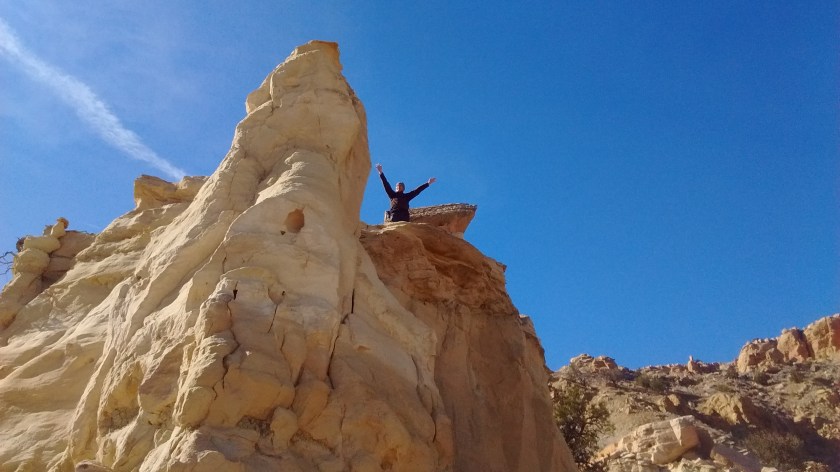
Finding hoodoos is one of our favorite activities that comes with hiking in New Mexico. Awesome views and bright blue skies are right at the top of our list, too. After what seemed like a long, dark, cold January we welcomed the start of February with a hike that gave us all of our favorites.
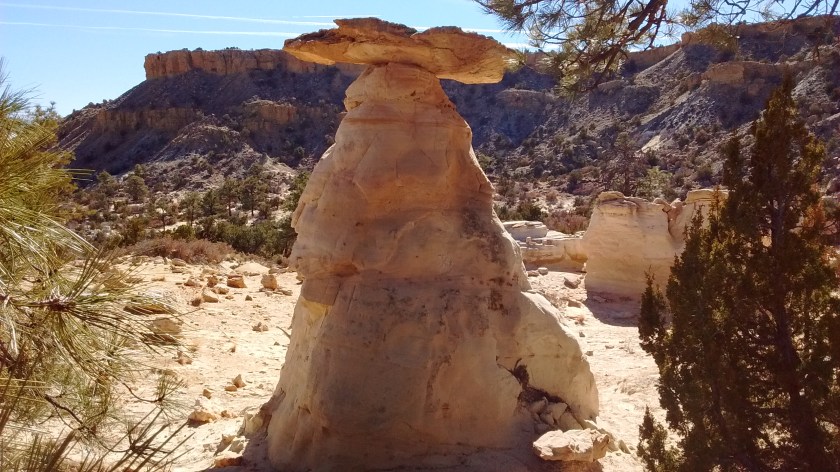
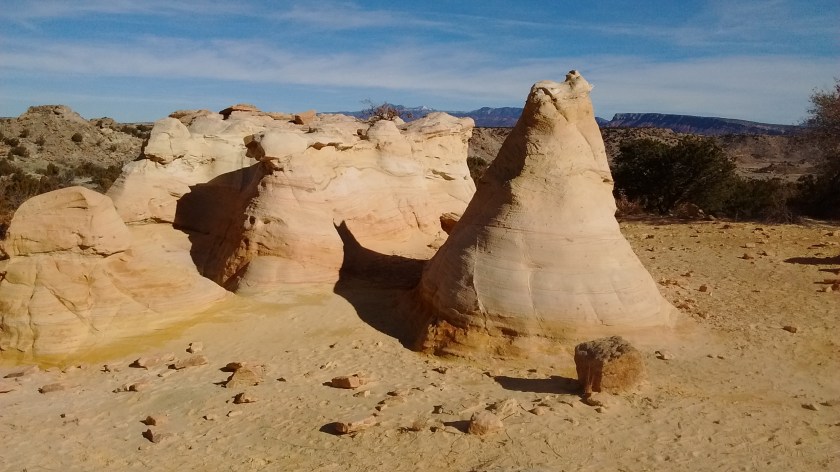
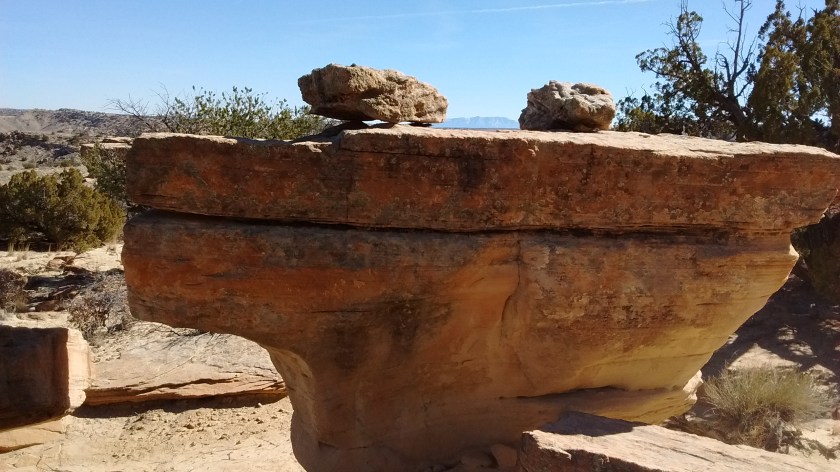
So what is a hoodoo? Here’s an example:
Over eons of time, wind and water (mostly wind in New Mexico) work on layers of rock to erode away the softer rock and leave behind columns of harder rock layers. And many times on top of the column you will see a stranded rock precariously perched looking like a giant hand decided to just set it down somewhere.
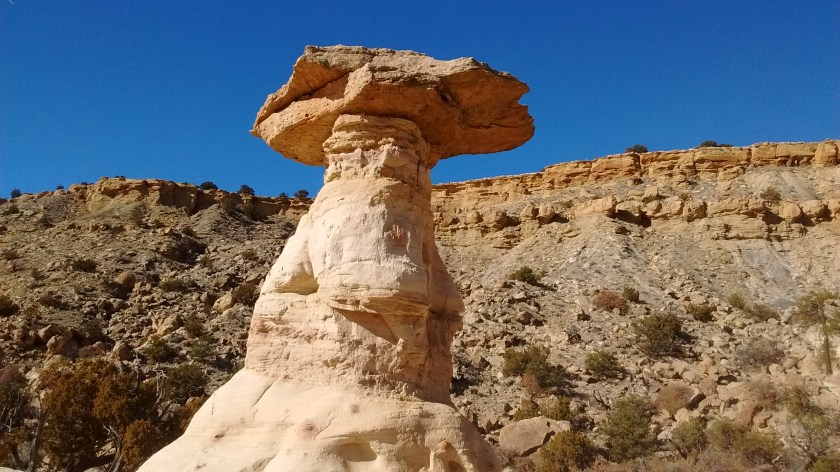
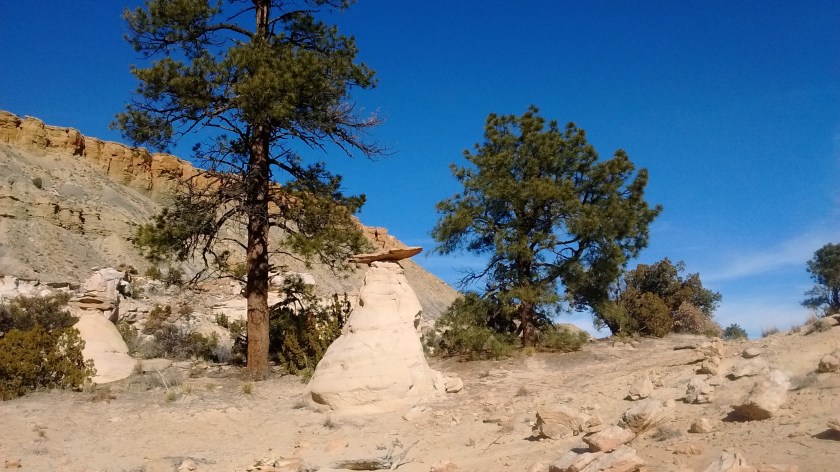
Here’s another example:
And here you see that bright, blue sky that made the day so special.
And I thought this one was cool because it looks like the silhouette of a dog.
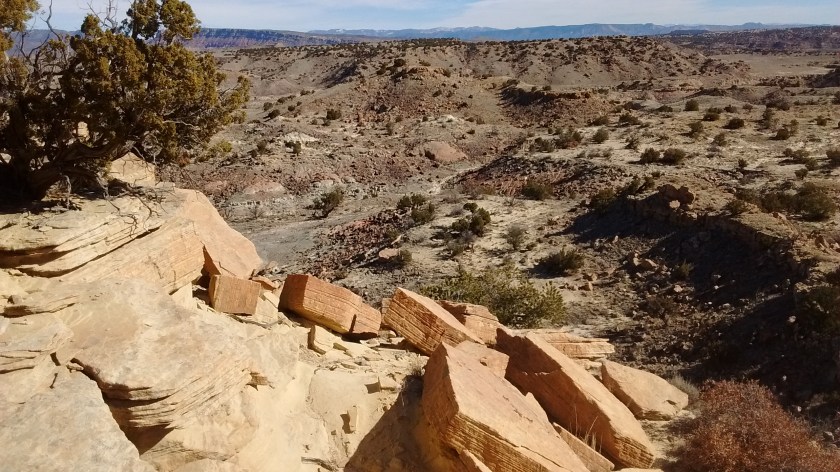
These are not hoodoos, but they show the erosion of soft, sandstone rock that often exposes colorful layers and forms miniature “tent cities.”
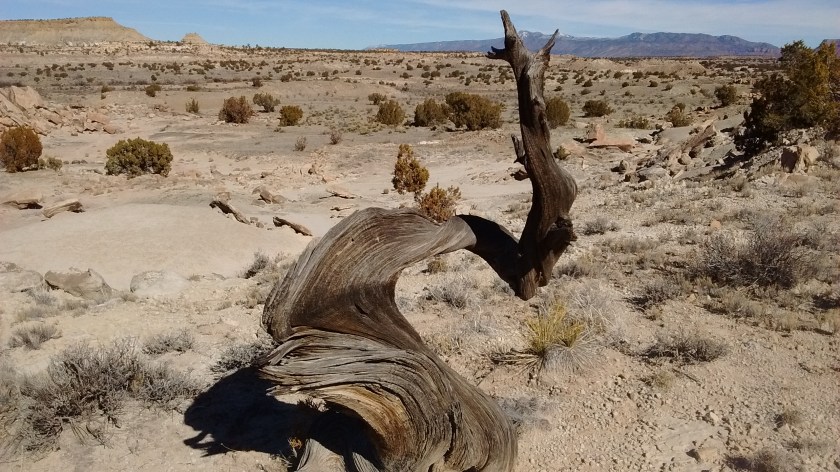
Rocks aren’t the only thing that gets shaped by the wind.
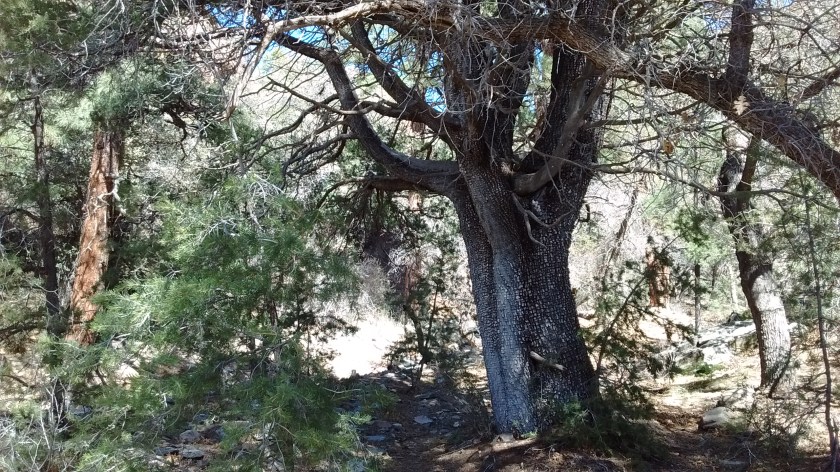
This particular hike was in the Ojito Wilderness. The area with the hoodoos is commonly called Hoodoo Pines because the hoodoos are in a small grove of Ponderosa Pines. Most of the terrain in the Ojito is desolate, open desert with scattered mesas here and there. So it’s a bit unexpected to find Ponderosa Pines.
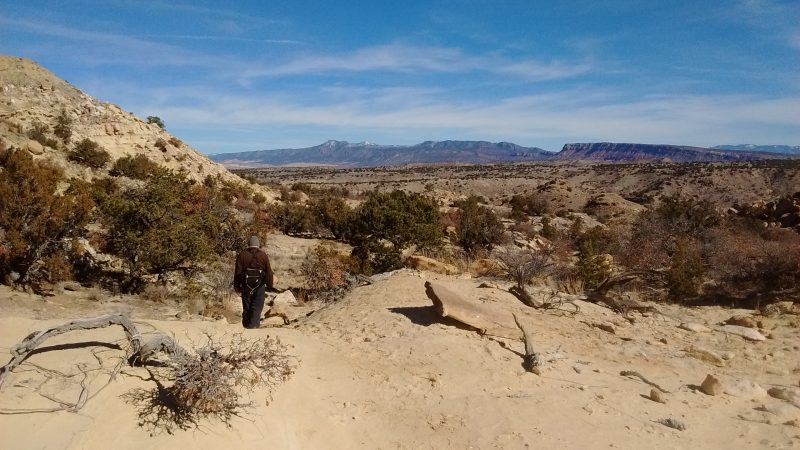
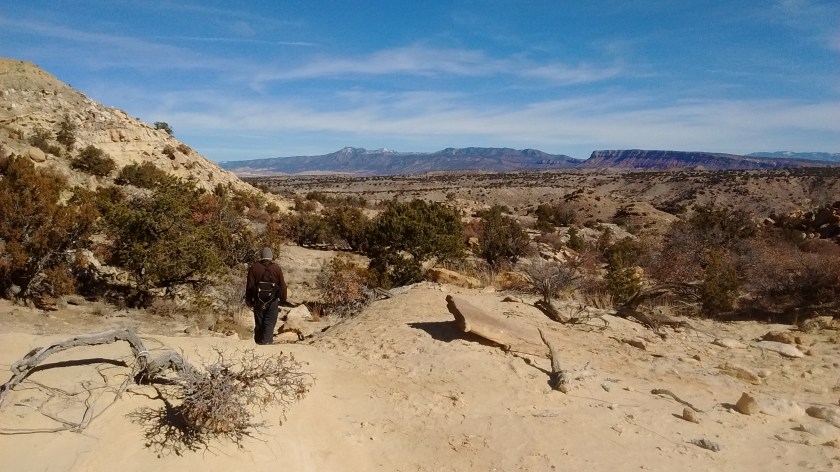
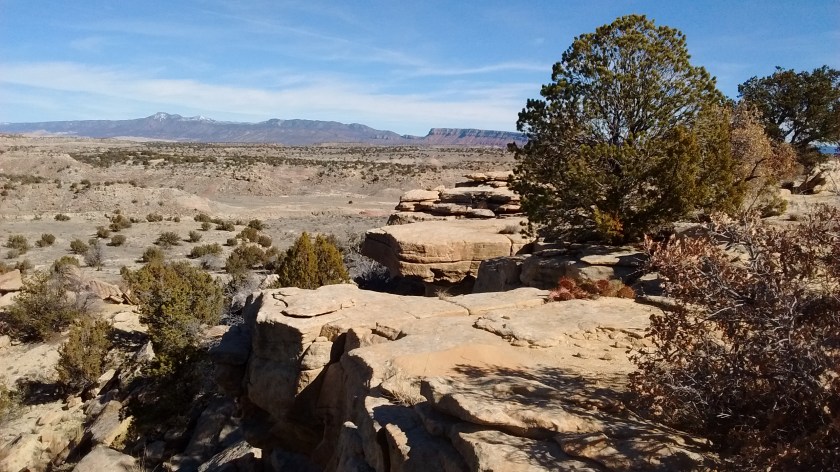
Looking south. Albuquerque is at the foot of the Sandia Mountains on the horizon, so we aren’t too far from home.
What an enjoyable Texas winter holiday we have had–Christmas in Big Bend, New Year’s in Brownsville and a stop in between to visit the Malloy’s in Brackettville.
Our visit with the Malloy’s included a day trip to San Antonio. Everyone learned some history at the Alamo.Big Bend sunrise.This is my “Big Bend Love” photo taken on our Christmas Day hike.
During our three days in Big Bend we did several hikes, the major one being the 12-mile Chisos Basin South Rim loop hike on Christmas Day. The trail is very well maintained with plenty of switchbacks, making it not as difficult as I thought it would be. The views from the top were every bit as rewarding as we knew they would be.
Casa Grande, one of the highest (7200 feet) peaks in the Chisos Mountains, but not one to climb.View from the South Rim.Proud of having made it to the top.Looking northeast from the South Rim.Coming down the northeast side.
Descent on Boot Canyon Trail with rock that looks like an upside-down boot.
One of the recurring views from the South Rim, looking out over the desert towards the Rio Grande River, was a small opening in the distant mountains. We knew this was Santa Elena Canyon, where the river has cut a deep, narrow gorge through high rock cliffs. Wanting a close-up view, we drove the next day to the mouth of the canyon where a short path climbs along the walls of the canyon and then for a short distance along the river.
Rio Grande River as it comes out of Santa Elena Canyon.On cliffside walls inside canyon, looking out. Terlingua Creek is visible on the left as it empties into the Rio Grande at the mouth of Santa Elena Canyon.Inside the canyon.
An interesting shorter hike we made on the morning we drove out of Big Bend, led us across some barren desert terrain to Dog Canyon. It looked similar to Santa Elena Canyon, but was carved by a river that is no longer in existence. And since it is much smaller it was possible once we got to the canyon to walk right through it to where it came out the other side of the cliffs.
The start of the hike leads across some desolate terrain.Looking closer revealed special desert life such as the Christmas Cholla, which seemed appropriate for Christmas season.Approaching Dog Canyon.Exploring Dog Canyon.
Now we are enjoying a week in Brownsville, Texas, the very southernmost point of the state. Here we have visited historic sites, birding centers, the beach, and a forest sanctuary. Sabal Palm Sanctuary was once part of the 20,000 acre Rabb Plantation. It is now a 500-acre preserve that is home to one of the last stands of old-growth Sabal Palms. We enjoyed walking the trails through the sanctuary, as well as going into the Visitor’s Center, which is inside the huge Victorian mansion that was originally built as the headquarters of the plantation.
Visitor’s Center at Sabal Palm Sanctuary is in historic Rabb Plantation House.Looking into Mexico across Rio Grande River at Sabal Palm Sanctuary.Walking trails in Sabal Palm Sanctuary.
Beach day at Boca Chica.
With our three days left here in Brownsville we are working through our list of places not yet visited. If we don’t get to see everything, there is always next time. Down here they call people like us “Winter Texans.” This is an excellent place to escape the cold weather so I hope to have that label for many winters to come.