Mesa Penistaja

After viewing hundreds of photos last night from Mike Richie’s “San Juan Basin Badlands” presentation at the Native Plant Society meeting, it was obvious that today’s hike should be an exploration of one of the areas discussed in the presentation. Shortly after moving to Albuquerque, I went on a hike with the hiking club to Ceja Pelon, one of the 5 Nacimiento Badlands west of Cuba. Lee and I have considered exploring out there before on our own but without any established trails we didn’t know if we should attempt it.

Just recently, however, I discovered a phone app that allows me to load a GPX track on to a map and then follow the track–exactly the functionality that a handheld GPS device provides but no need for an extra gadget. The hiking club publishes their GPX tracks on their website so now we can use their tracks to guide us to new destinations.

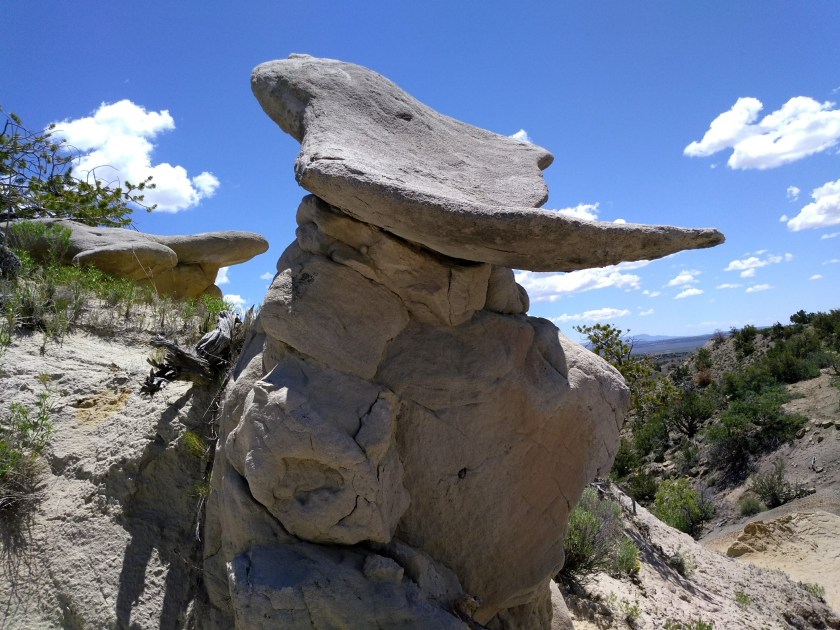
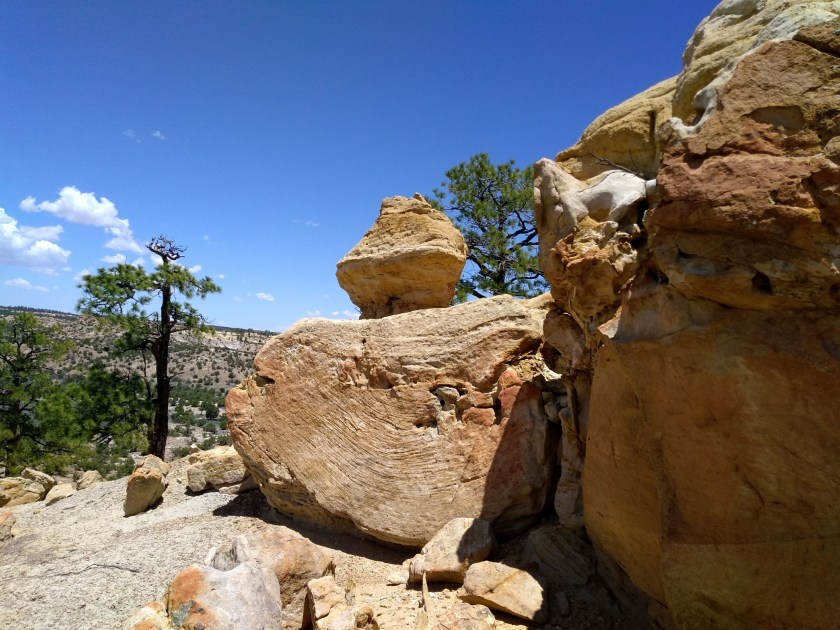
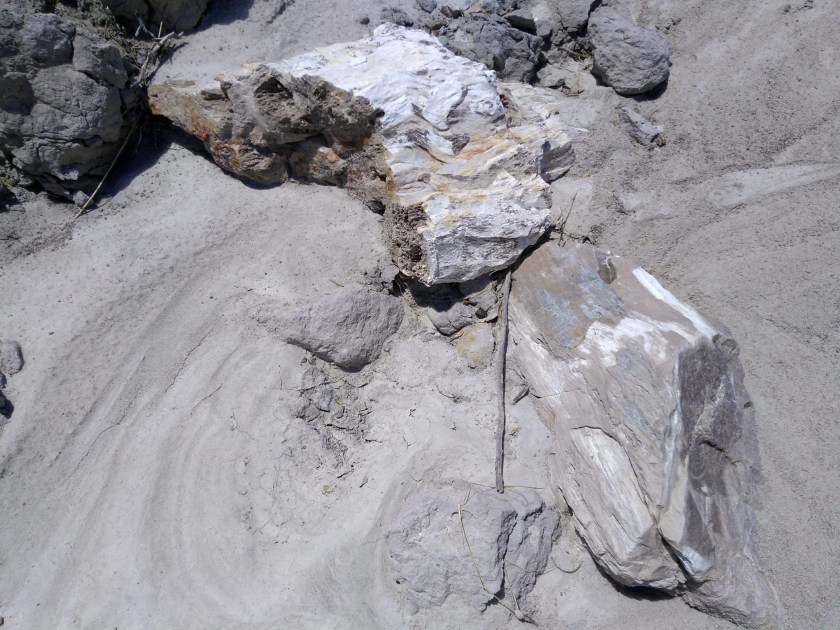
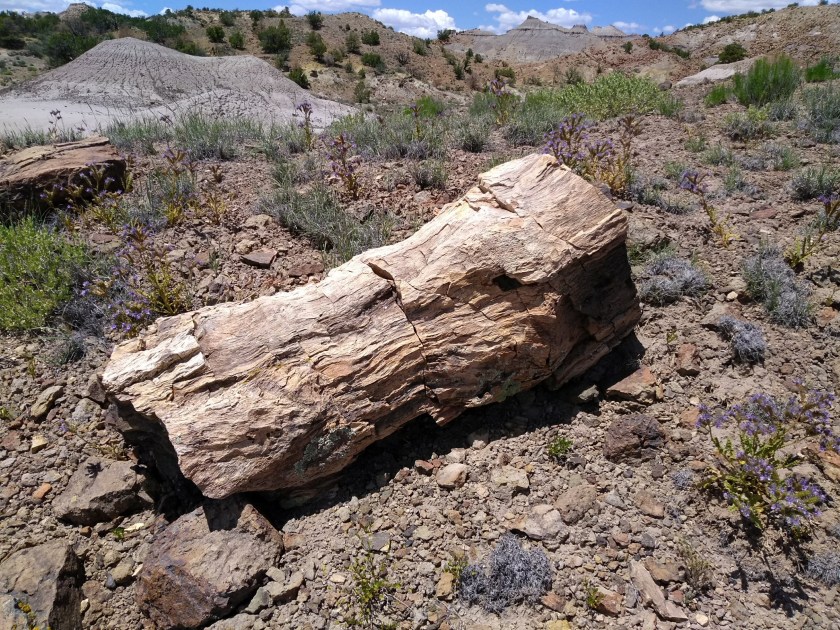
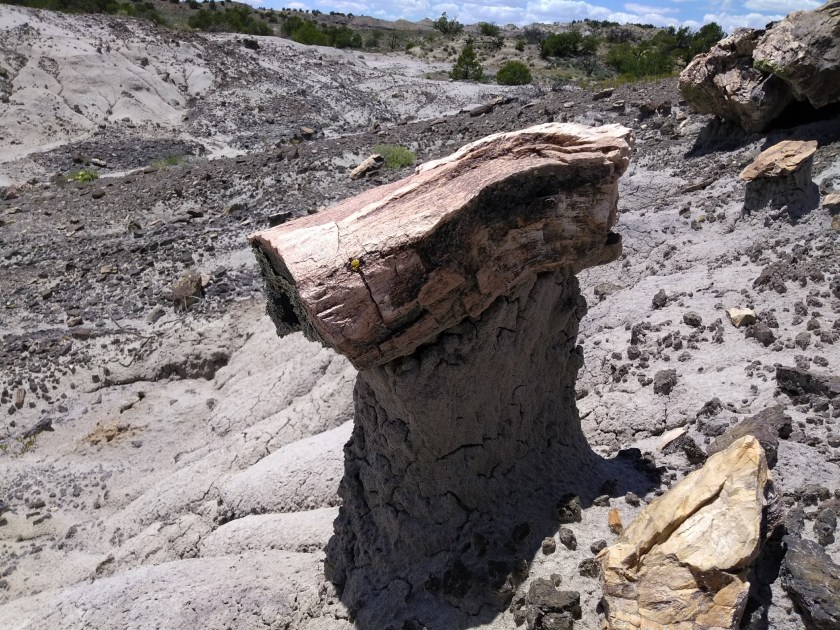
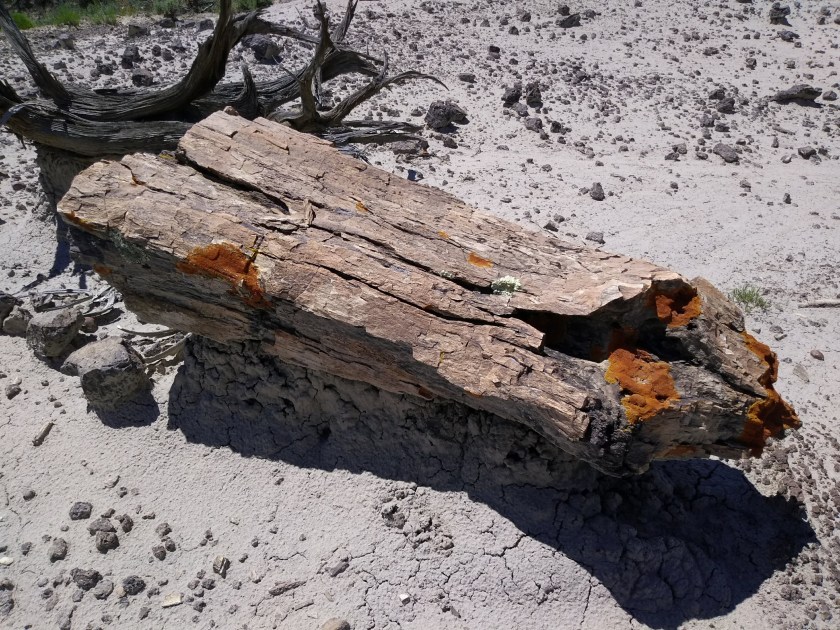
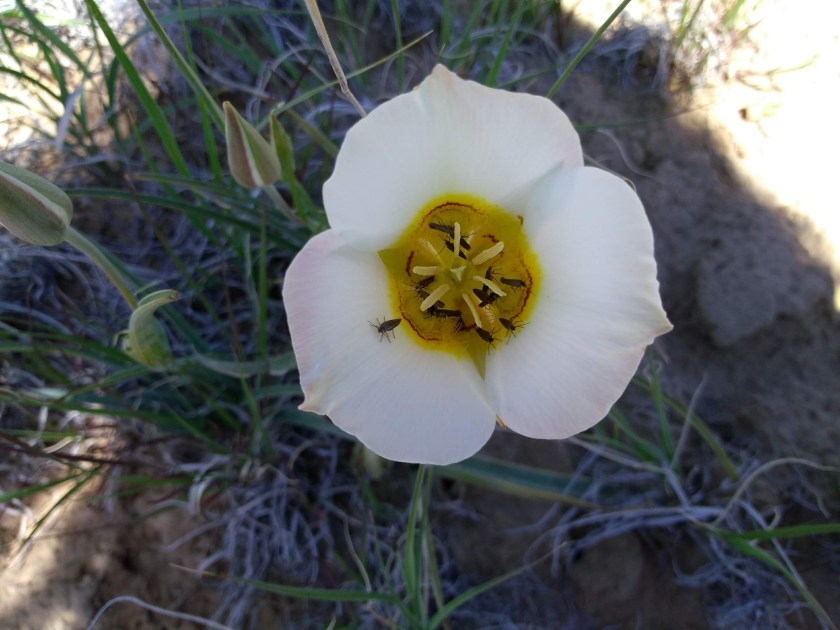
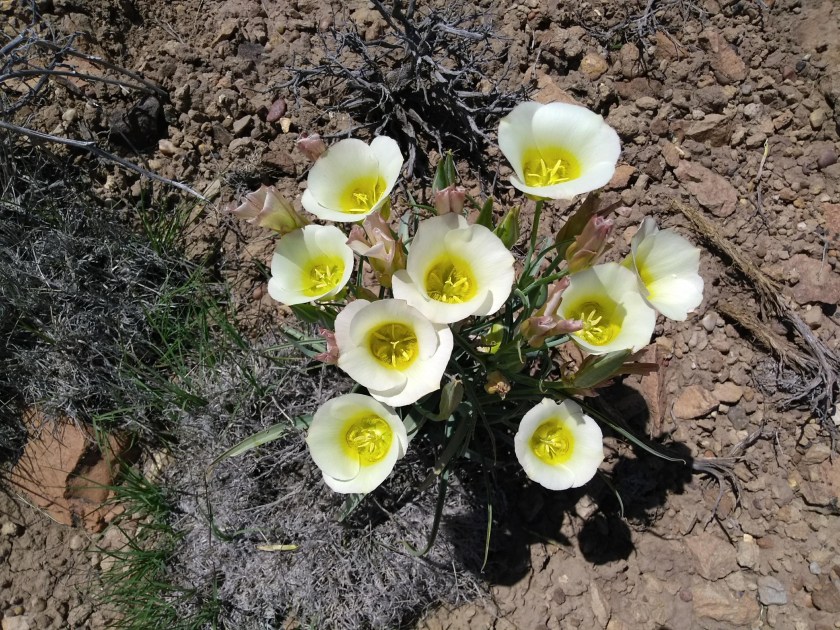
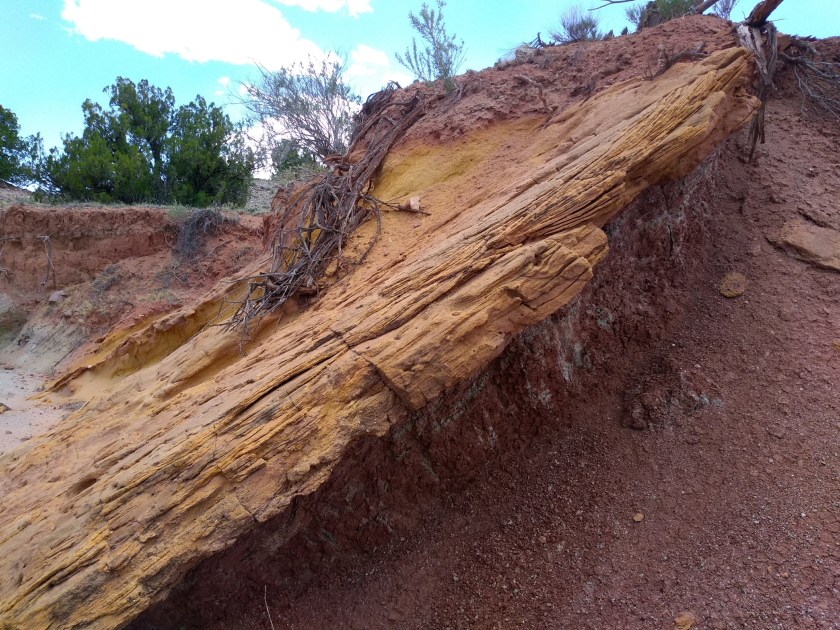
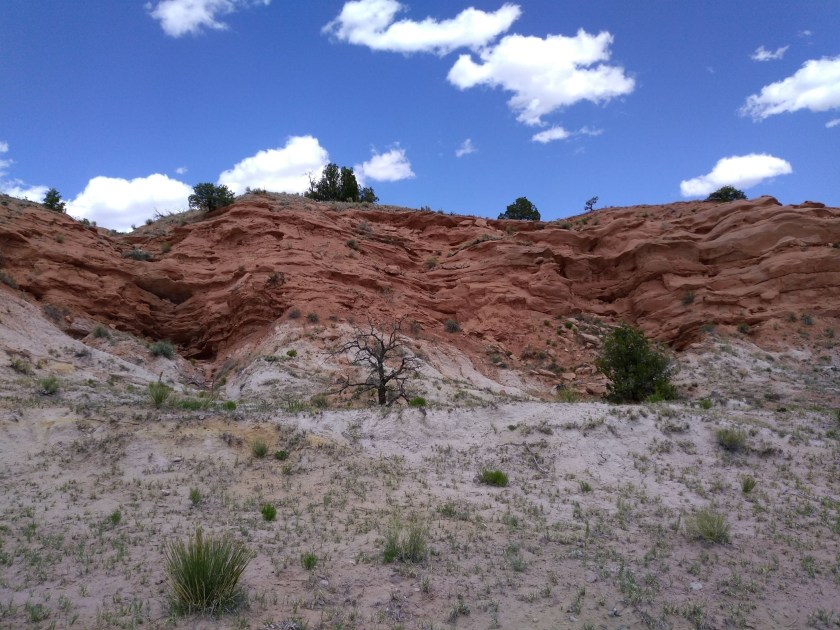
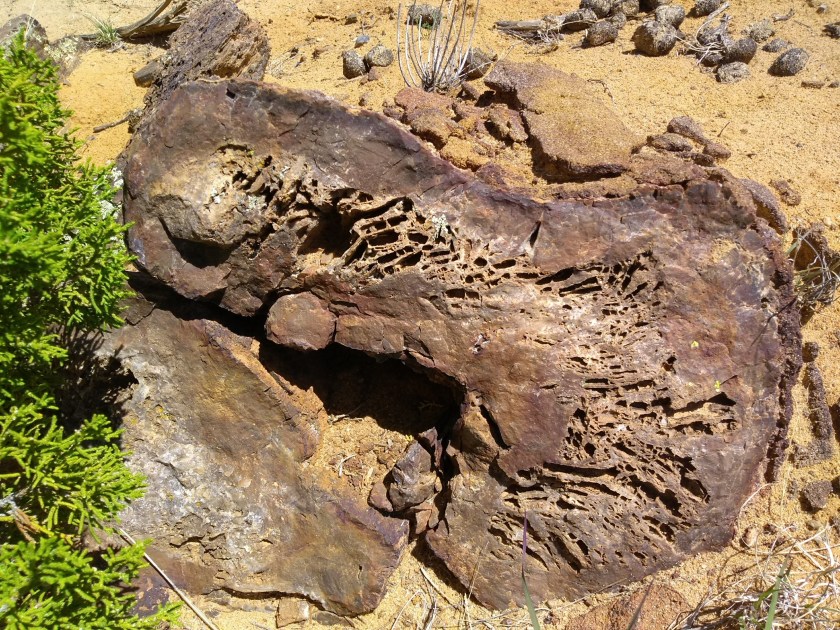
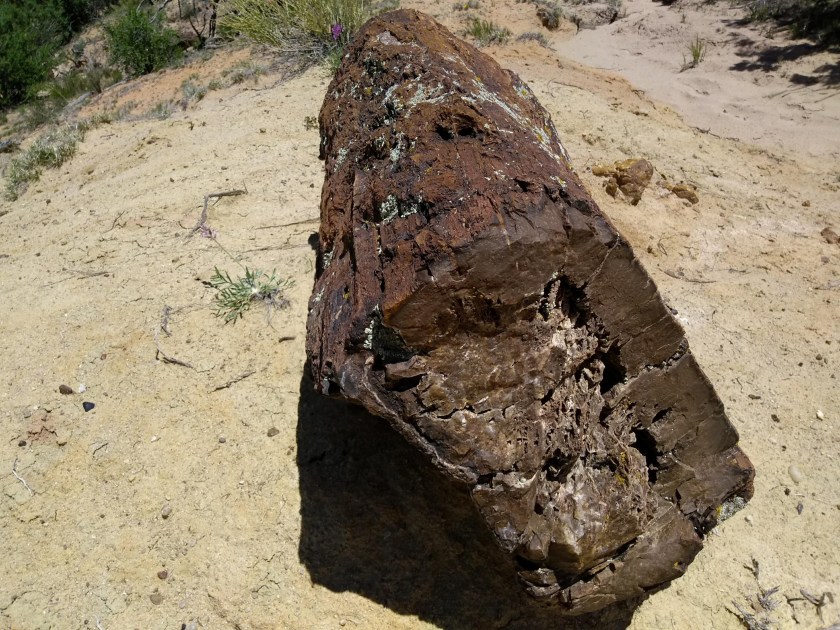
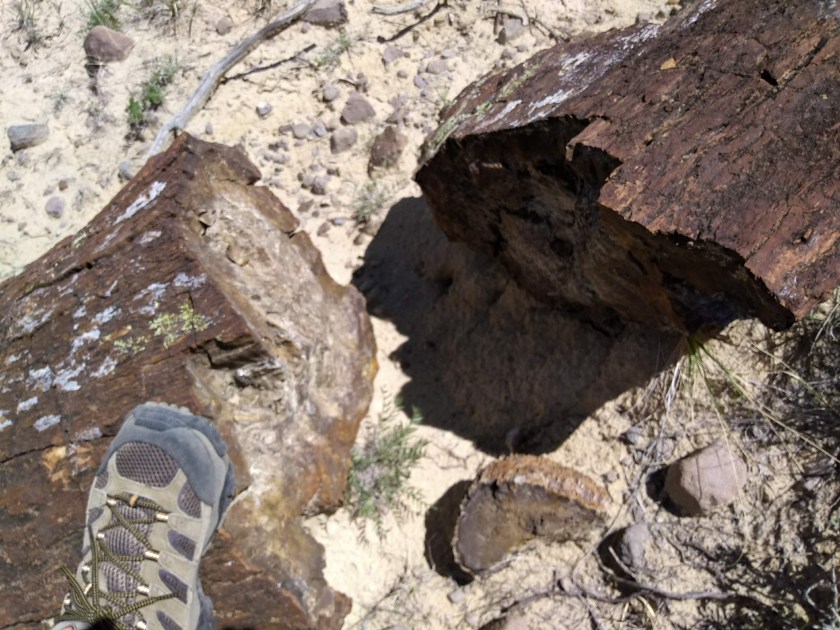
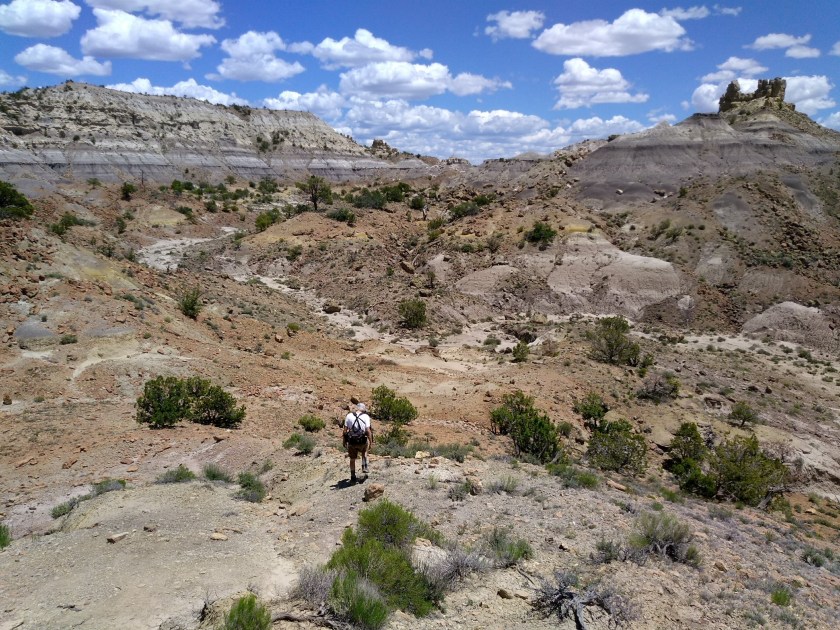
For today’s hike we selected Mesa Penistaja, a 6.6-mile loop hike that promised interesting rock formations and lots of petrified wood. It certainly delivered on the petrified wood. Pieces of all shapes, sizes and colors were scattered throughout the arroyos and on top of the hillsides. The dominant flower in the grassy areas was the Mariposa Lily. I have never seen them in such abundance. Many were growing together in clusters, whereas usually they are just a single isolated plant.

The GPX track gave us a place to start the hike and a reassurance that we could find our way back through the maze of arroyos. We ended up only doing about half of the published hike before we veered off and created our own track. With so many things to look at we weren’t hiking very fast and, given how hot it was, we felt that 5 miles was enough to call it a day.

1

2

3

4

5

6
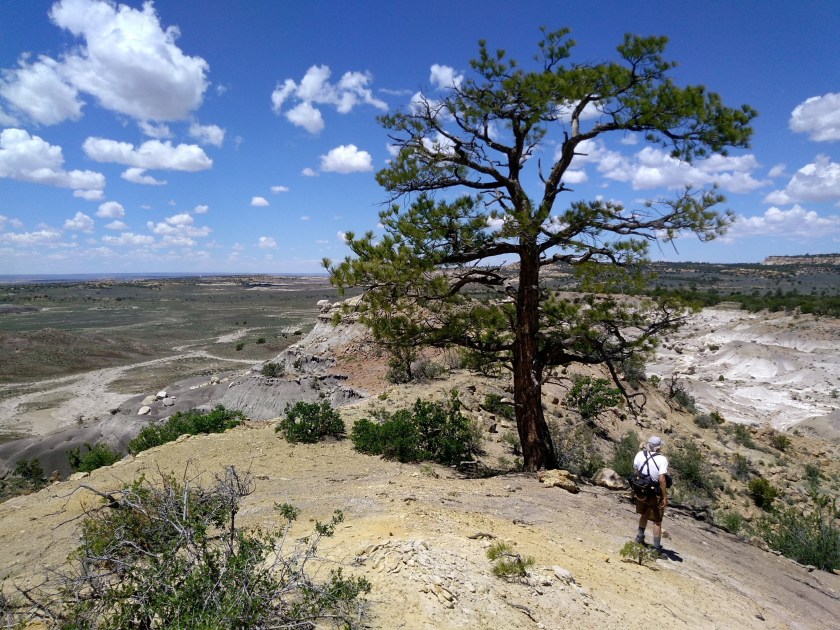
Ponderosa Pine grow on the mesa tops.
7
And some of them are fighting for their lives!
8
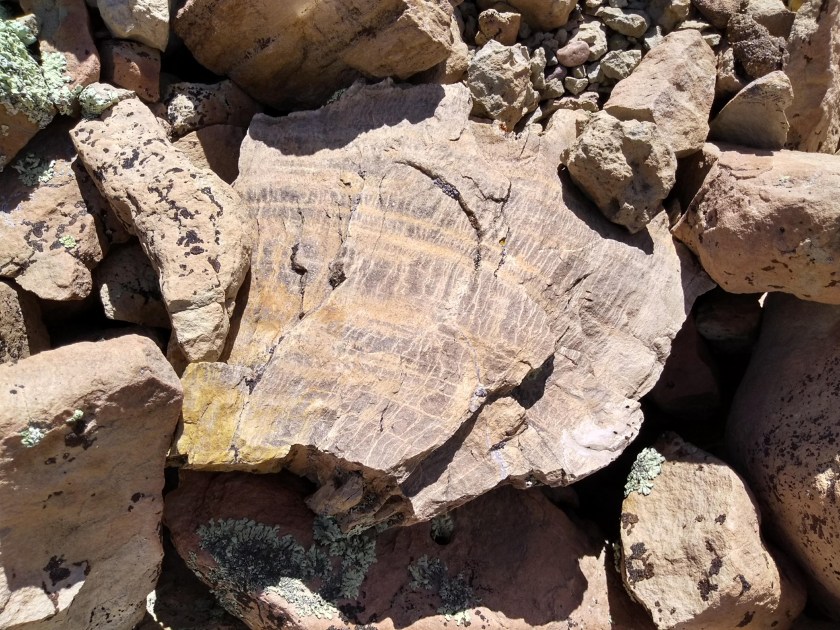
Detail in petrified wood.
9
A pile of petrified wood.
10
Bleached white petrified wood in arroyo bottom.
11
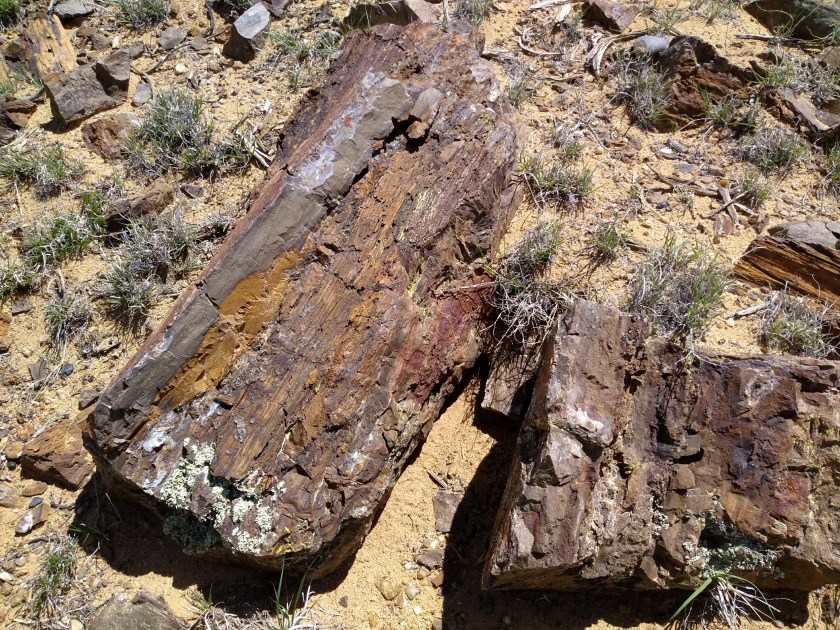
Looks like a regular log, but it’s petrified.
12
A chunk of petrified wood that got left on top of eroded mud.
13
Petrified log next to a dead branch.
14
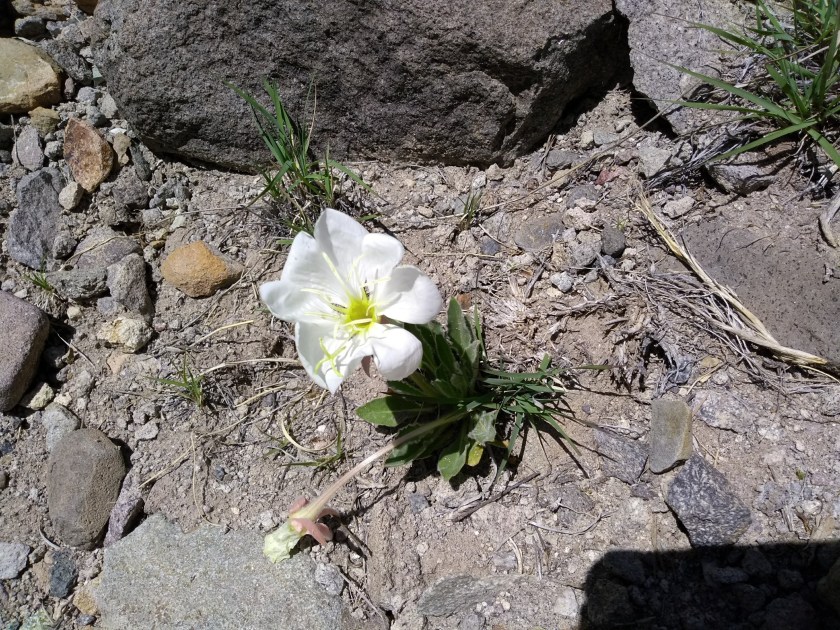
Close-up of Mariposa Lily.
15
Cluster of Mariposa Lily.

16

17

Ball Ranch

I had heard about Ball Ranch, a section of BLM land less than an hour’s drive from town, that has areas to hike through, but I didn’t know much about it. Then last month I learned more about it from the latest edition of “60 Hikes Within 60 Miles of Albuquerque”.  At a talk given by co-author, David Ryan, he said that it is one of his favorite places to hike because of a large area there that is covered with petrified wood. That captured my interest.

Getting there involves another one of those dreaded stretches of rough New Mexico dirt roads. In addition, since it is surrounded by Pueblo tribal lands, there is a locked gate at the entrance to the road that crosses tribal land to get to the BLM land. You have to go the BLM office in town and sign out a key for the time you plan to hike. Thanks to the information in the book, that was easily accomplished.

I also carried the book along on the hike, knowing that there wouldn’t be any established trails to follow. Many times on BLM hikes we get off track, even with specific directions and maps, but that didn’t happen this time.

The first part of the hike had us walking in an arroyo that was trampled down with hundreds of fresh hoof prints and obvious signs of the presence of a large horse herd. I thought at any moment we might round a bend and see some wild horses. No such luck.

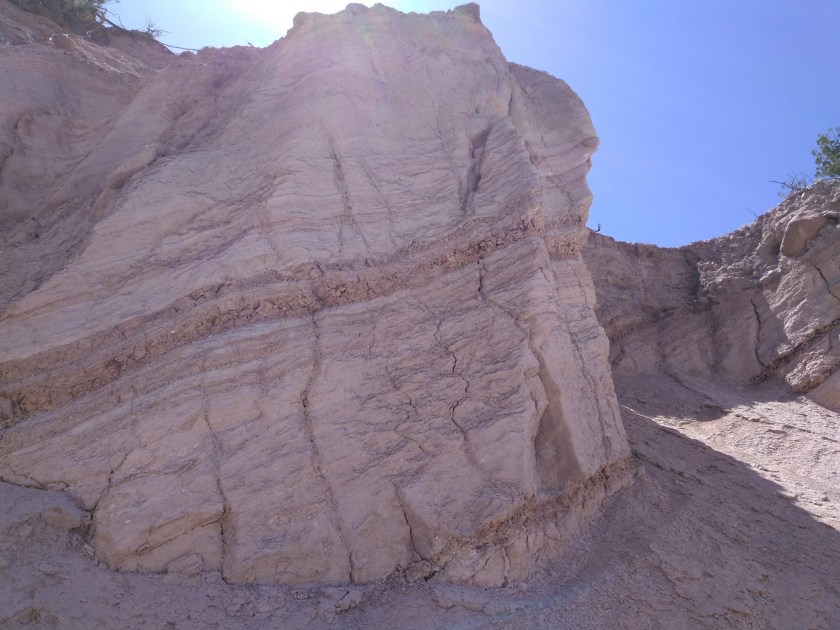
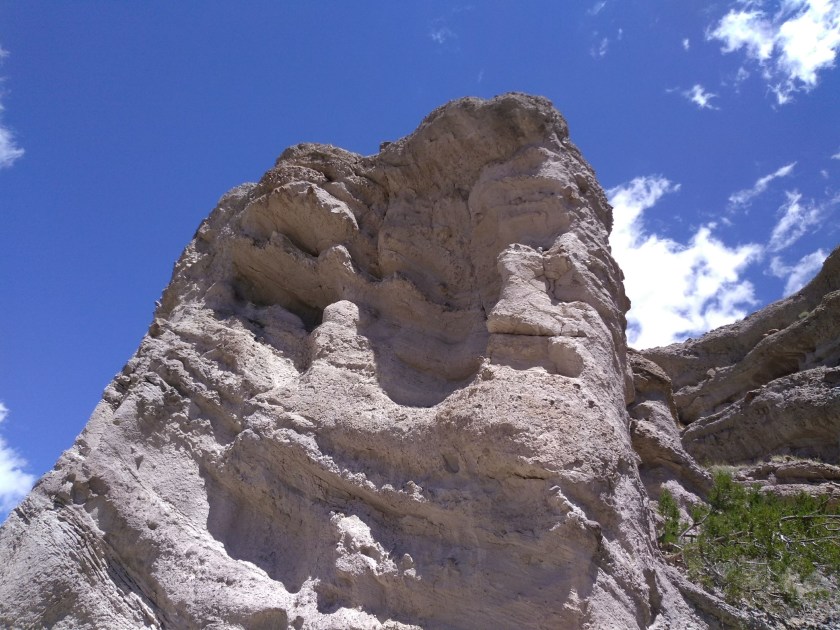
But Lee did see some wildflowers to photograph and I enjoyed gazing at the many-layered, hardened mud walls of the arroyo.

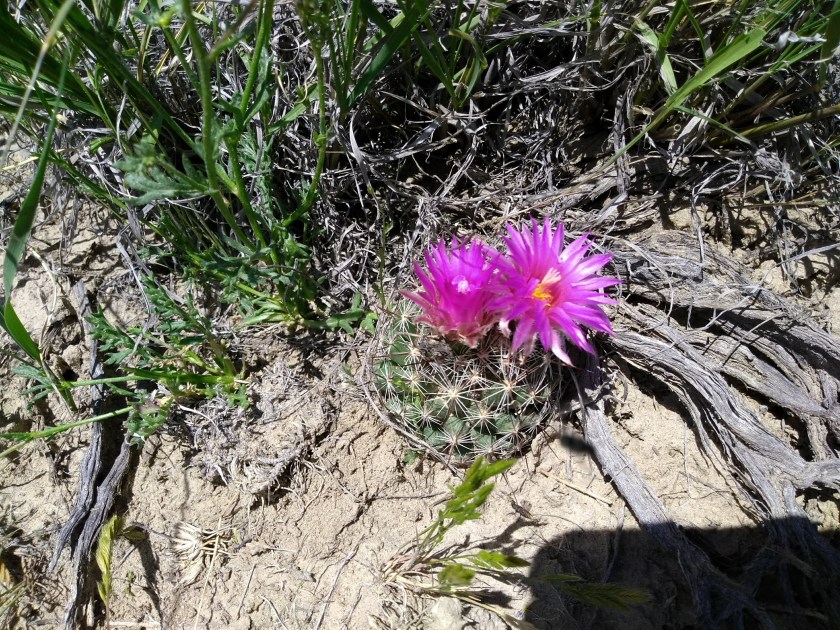
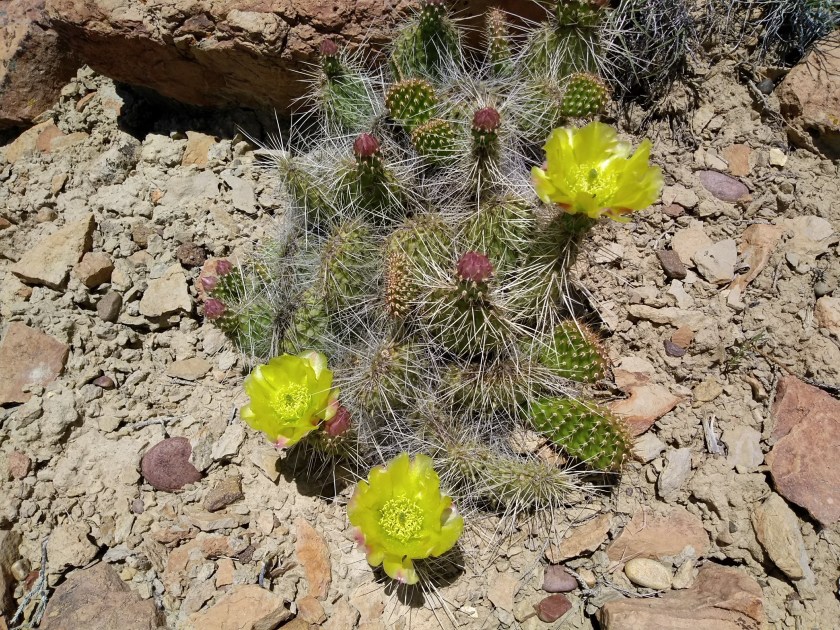
Some spring wildflowers

When it came time to climb out of the arroyo for the side trip to view the petrified wood, we weren’t sure at first that we were in the right place. But then we started to see chunks of petrified wood scattered on the sandy hillsides around us. The more we looked the more excited I got. It is simply amazing to see so much petrified wood in one place.

A fun hike for viewing geology and flora, even without seeing any horses. Back at the BLM office the person at the desk said that there are more wild horses than the grazing can support. The BLM tries to round them up but they head off into the surrounding tribal lands where the BLM doesn’t have the authority to enter. Maybe next time we will see some horses.