Road Trip


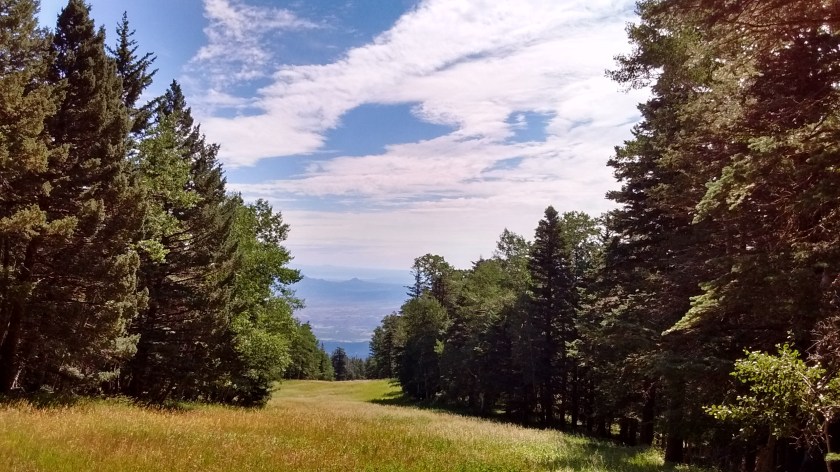
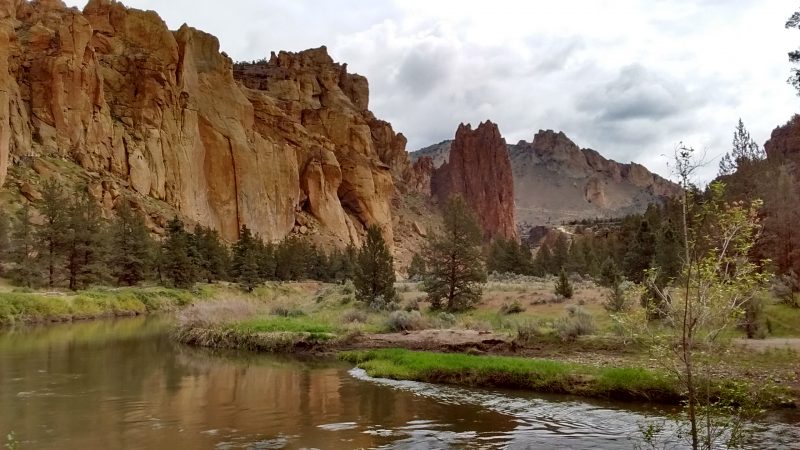
One of the problems with an extended road trip, such as our recent excursion from New Mexico to Arizona to California to Oregon to Idaho to Utah to Colorado and back to New Mexico, is how to deal with all of the photos that we took. The simplest for me is to upload a selection of them to Google Photos and then share the link with anyone I think might be interested.

Unfortunately, Google Photos lacks a way to caption photos. There is a way to add a description to a photo and I have done that for some of them. The description, however, is not visible unless you first click on the small ‘i’ (Information icon) in the upper right corner. When the Info window opens it will remain visible as you scroll through the rest of the pictures making it easier to see if there is a description. The disadvantage is that having the Info window open forces the pictures to be in a smaller window. I don’t know why a supposedly user-friendly, innovative company like Google can’t put in a simple feature like captioning of photos.

There is an app (Snapseed) that I can use on my phone to add text to pictures, although it is limited in what you can add. I used it on 5 of the farm animal pictures as a way to show each animal’s name. Sande has 2 horses, Ten and Snap, and 3 Brown Swiss milk cows, Tulip, Lily and Daisy May. There are also 2 Black Angus calves being nursed by Daisy May’s mother (Tulip) but I can’t remember their names.

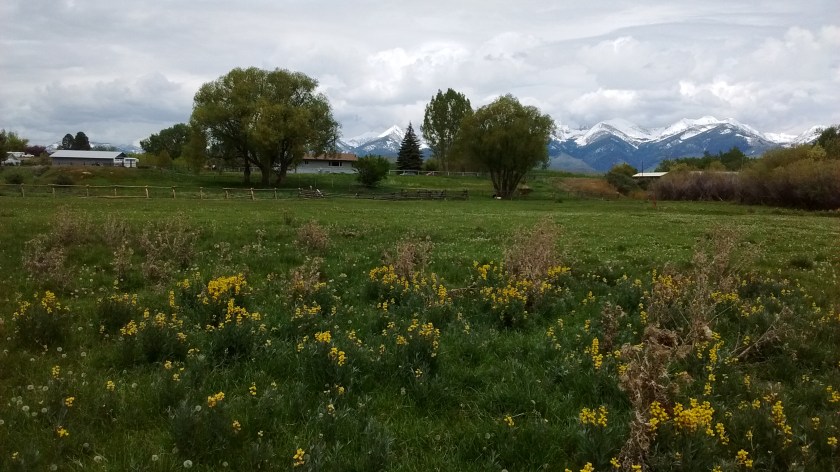
For those of you who may not know, we were in Salmon, Idaho, to help my sister, Sande, settle in to her new place. It is beautiful there–an ideal place for her and her animals (also includes 2 cats and a dog). The first half of the photos came from Oregon, where we had gone to attend the wedding of my nephew. Overall, in spite of the cold weather, our road trip was an outstanding success.

All that being said, here is the link to the photos.

Quebradas Byway Blooms

From a ridgetop in the Quebradas looking west towards Socorro.

Looking over the landscape of the area east of Socorro, you wouldn’t think of it as a very interesting place to hike. A 25-mile dirt road known as the Quebradas Backcountry Byway cuts through a vast emptiness of arroyos, ridges and open rangeland. But if you park at one of the stops along the Byway for a closer look you find many opportunities worthy of further exploration. Today we chose a hike up one of the named arroyos, Arroyo del Tajo, and were rewarded with spring wildflowers, as well as interesting geology.

Desert Marigold

Hillside with ocotillo, not quite in full bloom yet.
Desert chicory
Prickly pear cactus blossom
Look close. Desert onion almost camouflaged against brown rock.
No it’s not ice. A vein of gypsum in the sandstone.
Sundrop.
Blackfoot daisy.

Indian paintbrush.

Ruins of a cabin.
Head of a box canyon.
Red bluet.
Forget me not.

Claret cup cactus bloom.

I had hoped that we would see more of the claret cup cactus blooms, as they really are my favorite. But I think this spring has been too dry. Most of the cactii I saw had blossoms that looked like they had dried up before they had a chance to bloom. But it never ceases to amaze me that as dry as the desert is, it can still produce such a variety of wildflowers. I only posted photos of a small portion of the different kinds that we saw today. And with even a little bit of rain between now and when we go on our next hike there will be all kinds of new blooms. If you just get out of your car for a closer look at what might seem a barren landscape you realize the desert is actually full of life.