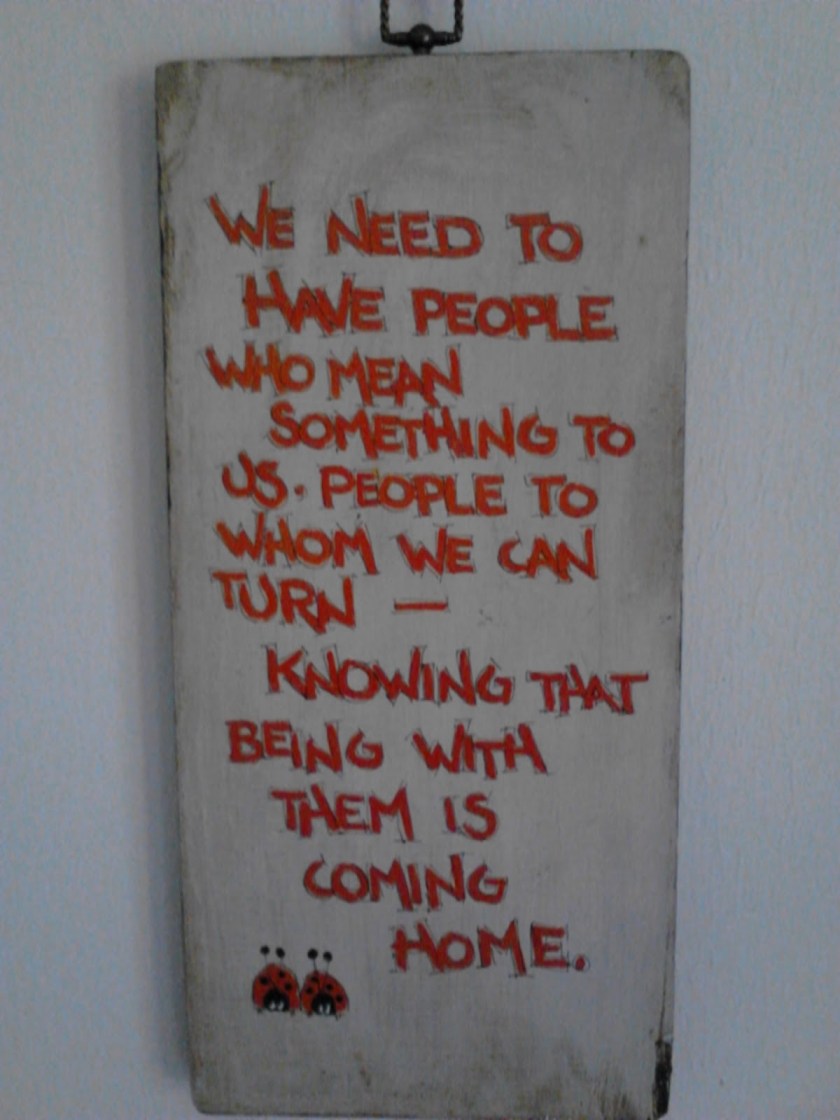
Our year of travel and being “homeless” has been a great adventure, but it has also been a wonderful opportunity to stop at various locations in the country and spend time with family and friends we wouldn’t otherwise see because they don’t live nearby. The plaque above in the guest bedroom here at the Regan’s house in Bowling Green, Ohio, is a reminder that home is much more than a street address where we receive our mail and place our belongings.
Before we arrived in Bowling Green we spent a couple of days in rural western Ohio visiting our friend, Jerry, at his home in Maria Stein. When we met Jerry last winter in Florida he told us about Maria Stein but neither of us had heard of it before and were not familiar with that part of Ohio. Jerry has lived there all of his life. His knowledge of the area and its people and his eagerness to share that knowledge with us was a delightful learning experience.
Mercer County, where Maria Stein is located, has a nickname “Land of the Cross-Tipped Churches.” It’s an appropriate name as you look around from nearly any location in the area and see one or more of the church steeples in the surrounding communities. The area was settled in the early 19th century by German immigrants who were almost all devout Catholics. Under the leadership of the missionary priest, Francis de Sales Brunner, the Society of the Most Precious Blood founded many churches and schools in the region, as well as several seminaries. The name Maria Stein, in German means “Mary of the Rock”. Besides St. John’s Church, one of the “cross-tipped” churches that is here, Maria Stein is also home to the Shrine of the Holy Relics, which has beautiful park-like grounds where Jerry gave us a walking and biking tour.

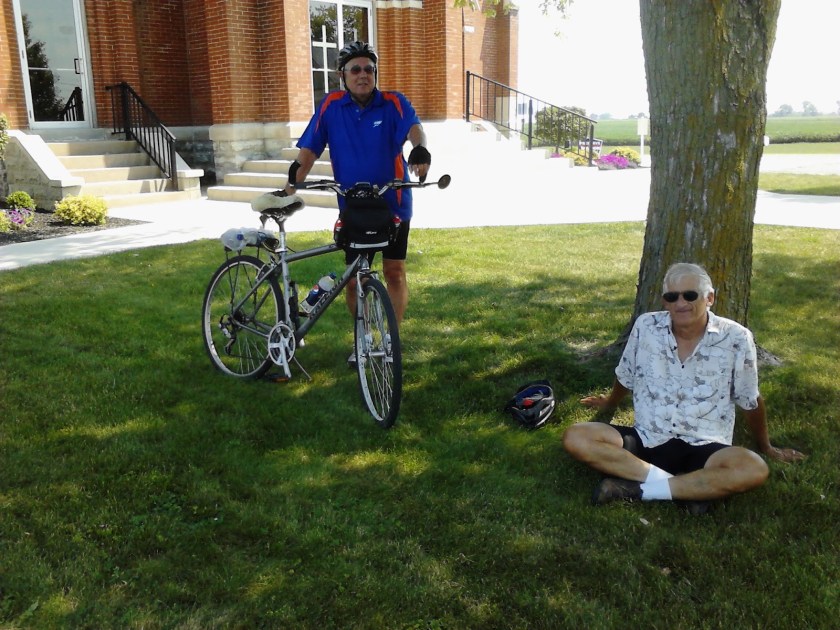
Jerry also led us on a bike ride to nearby Grand Lake St. Mary’s. This lake is Ohio’s largest inland lake and has the distinction of being the largest hand dug lake in the world. When it was completed in 1845 it was the largest man made lake in the world, but since the advent of power equipment to accomplish such tasks there are obviously now man made lakes larger than this one. Looking at the size of this lake (13,500 acres) it was hard to imagine that it was all dug by hand–one sign said it took about 1,700 laborers working for 8 years at a rate of 30 cents a day (and a jigger of whiskey for malaria prevention) to accomplish the task.
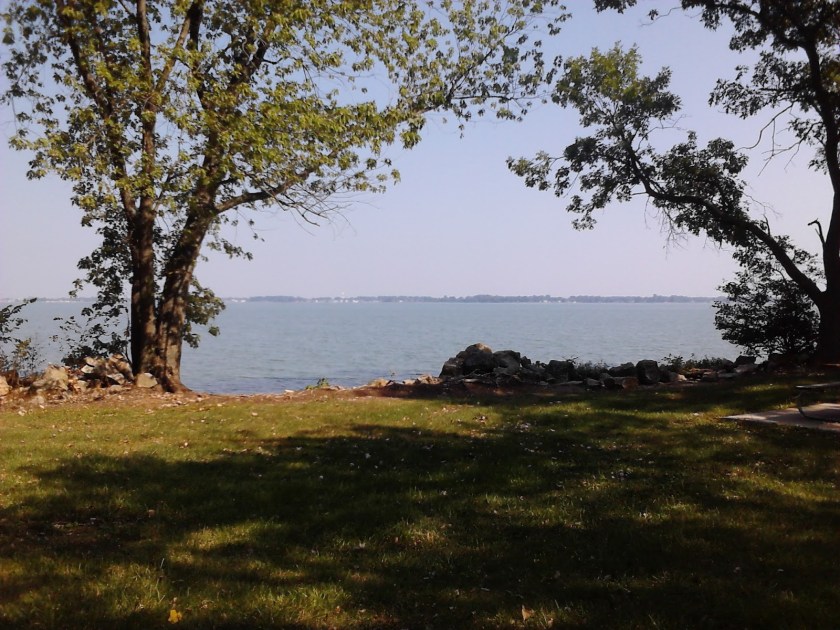
After an enjoyable visit in Maria Stein, we made the relatively short drive further north and east in Ohio and arrived in Bowling Green, Ohio, in time to spend our birthdays with Lee’s brother and sister-in-law. After a much-needed rainstorm Saturday evening and Sunday morning, we are enjoying pleasantly cool temperatures and will be doing some bike riding on roads and trails around Bowling Green.
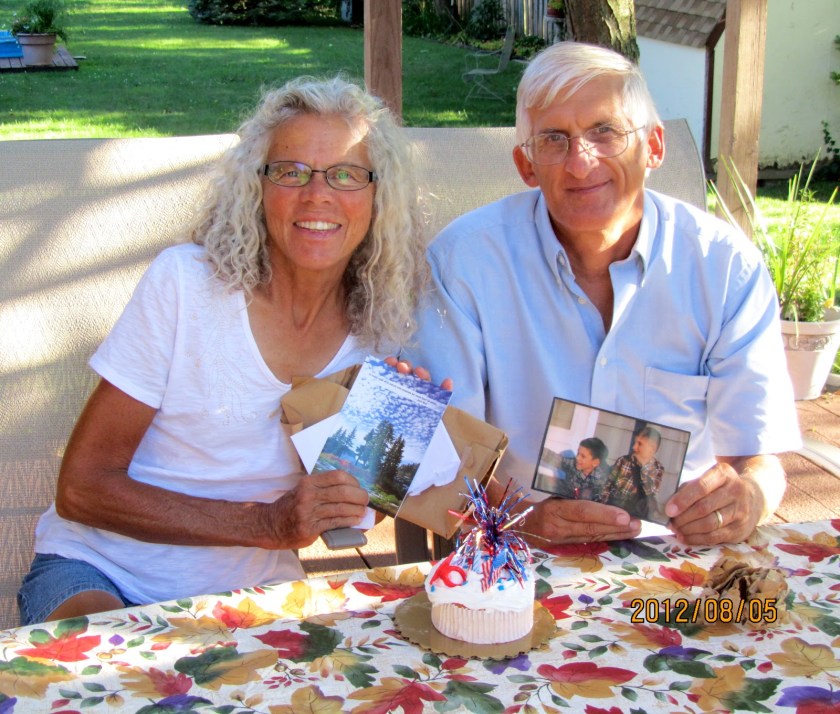
The 2 birthday kids. Lee is holding one of his gifts, which is a snapshot of him and his brother at a much younger age.


 Living Wonderously